Inside the pack
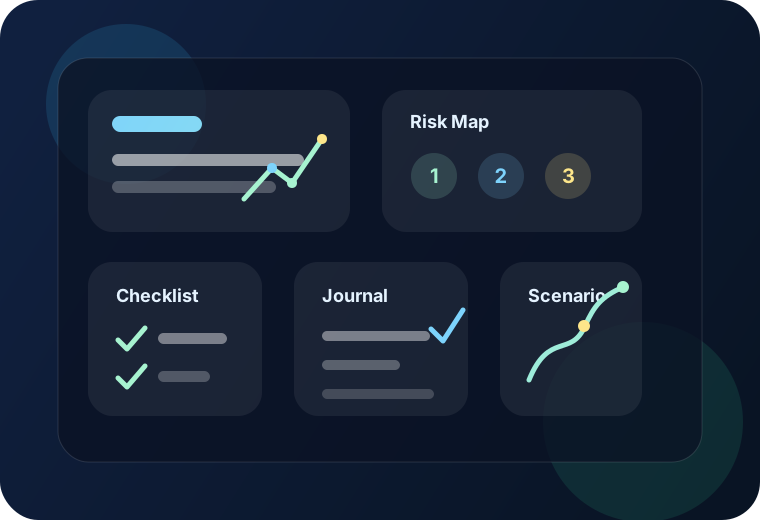
Interactive lesson board
Short modules that turn trading basics into a repeatable routine: context, risk line, invalidation, notes and review.
Take the short starter-route check. Your answers help us send the right worksheet first, and an education agent will contact you with the next step.
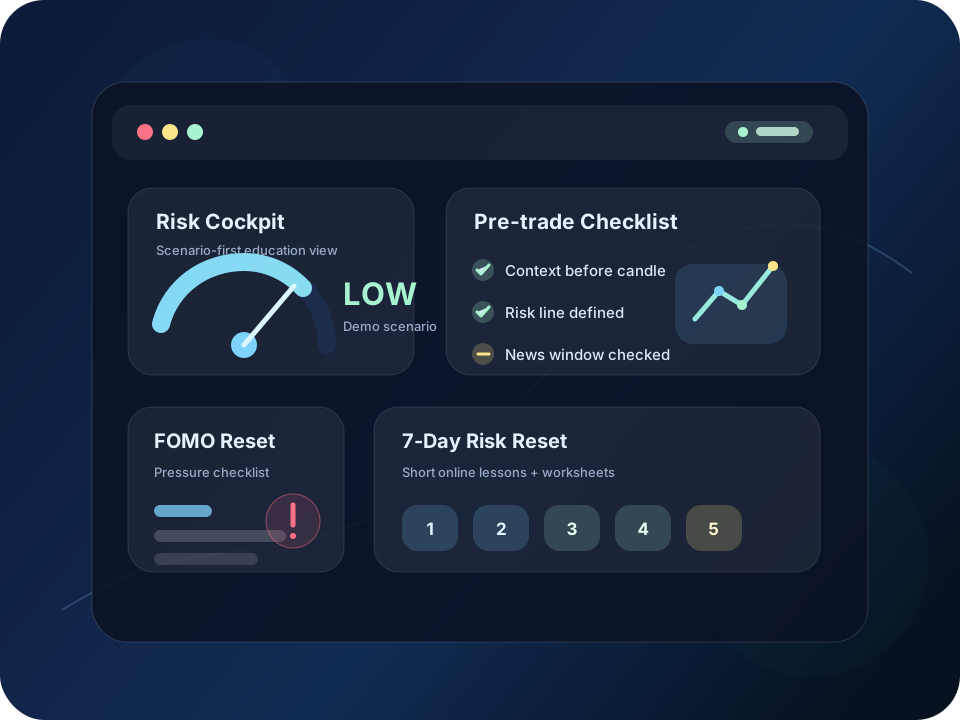
Designed for beginners who want structure. It gives you a cleaner way to think before you open a chart, watch a setup, or react to market noise.
Short modules that turn trading basics into a repeatable routine: context, risk line, invalidation, notes and review.
A simple framework for slowing down and asking better questions before any decision.
Spot where beginners usually get caught: leverage, news, liquidity, FOMO and undefined exits.
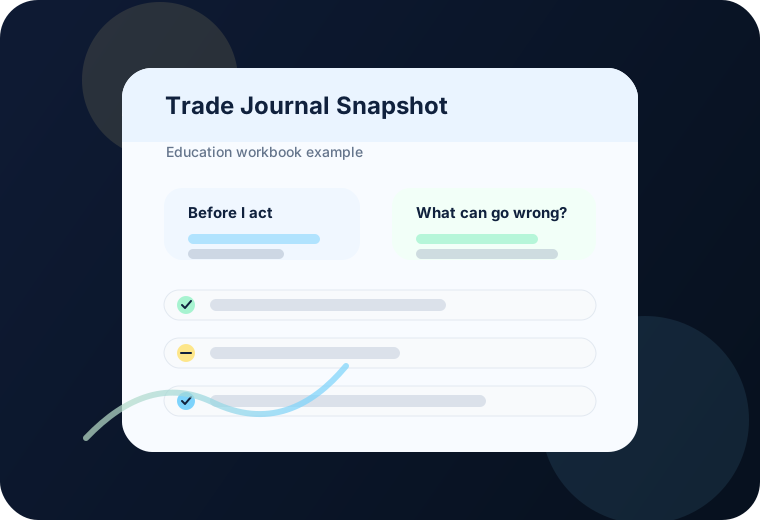
Capture what you planned, what happened, what you felt and what you learned.
Most beginners get pulled into charts, social posts and hot takes. Risk Before Trade starts earlier: what are you looking at, what could invalidate it, what risk are you accepting, and how will you review the decision?
Market context, volatility and news awareness.
A pre-trade checklist before ideas become actions.
Journal prompts that help you notice behaviour patterns.
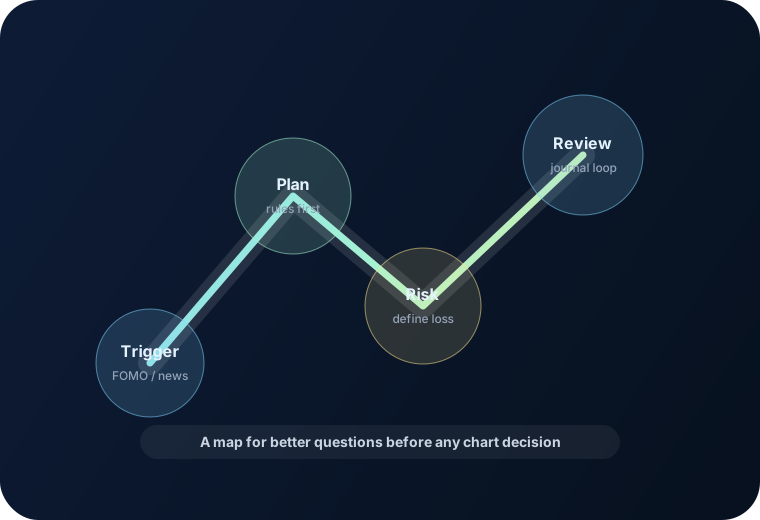
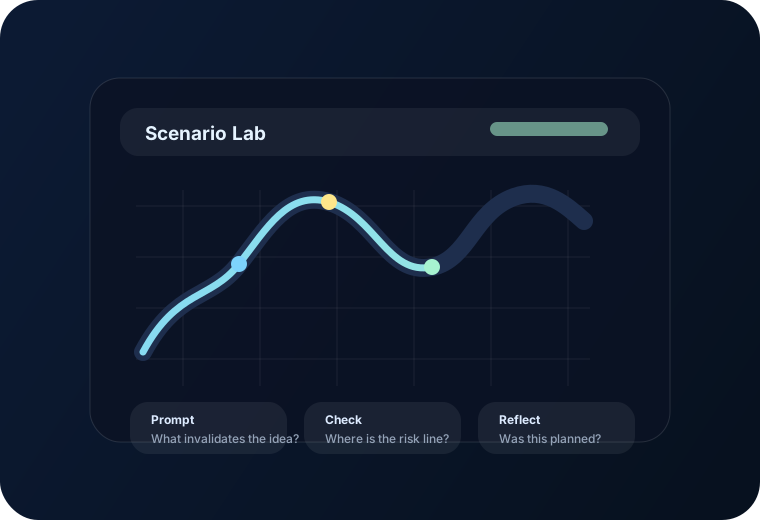
The training uses neutral examples to help you understand uncertainty, risk points and decision pressure. You are not told what to trade — you learn how to think through risk.
Answer three clear questions. An education agent will use your answers to send the right starter pack and follow up with you.
Matches your first worksheet and follow-up route
Route matched
Your first module is ready. Enter your details and an education agent will send the pack and follow up with you.
You will receive general trading education material and agent follow-up. Nothing here is a personal recommendation to buy, sell, hold or trade.
Adults only
The form cannot collect details for users under 18.
Back to topWe will send your starter route and an education agent will contact you using the details you submit.
Get clear on the difference between a chart idea, a plan, a risk point and an emotional trigger.
Turn the same questions into a checklist you can use while learning, demoing or reviewing examples.
Use journal prompts to separate process mistakes from normal market uncertainty.
The main product is a digital education funnel: starter pack, worksheets and follow-up lessons.
Yes. The starter pack is written for people who want to understand risk, market language and trading behaviour before they go deeper.
No. The material is educational and can be studied without opening any trading account or depositing money anywhere.
You are sent the starter pack route, and a Risk Before Trade education agent may contact you using the details you submit. Future education emails are sent only where lawful and consistent with your consent choices.
Yes. The worksheets and prompts can be used for general practice, demo review or education notes. They are designed to help you ask better questions, not to tell you what to trade.